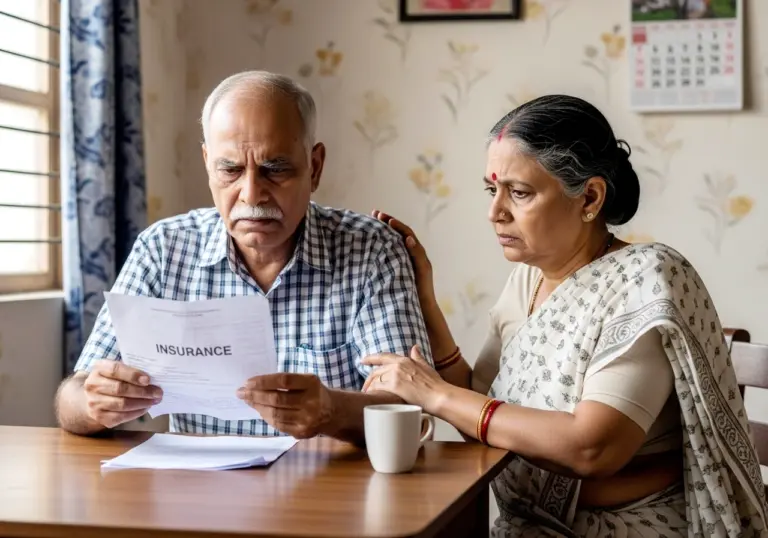
What is Health Claim Reimbursement?
A Health Claim Reimbursement is a process where a policyholder pays their medical or hospital expenses upfront, and later submits those bills to the insurance company for reimbursement.
In simple terms — instead of cashless treatment, the policyholder settles the hospital bill first and then claims back the eligible amount from their insurer as per the policy terms.
At Insurance Nidaan, we help policyholders ensure that their reimbursement claims are filed correctly, verified quickly, and settled fairly.
How Health Claim Reimbursement Works
- The insured person receives medical treatment at any hospital (not necessarily networked).
- Pays the hospital bill out of pocket at discharge.
- Collects all necessary documents — hospital bills, prescriptions, reports, discharge summary, etc.
- Submits a claim reimbursement form along with supporting documents to the insurance company.
- The insurer reviews the documents and, upon approval, reimburses the admissible amount directly to the policyholder’s bank account.
Common Issues Faced in Health Reimbursement Claims
- Missing or incomplete documents.
- Rejection due to treatment not covered under the policy.
- Delay in reimbursement processing.
- Partial payment (short-settlement).
- Incorrect interpretation of policy clauses.
FAQs on Health Claim Reimbursement
A health claim reimbursement means you first pay your hospital or medical bills and then submit a claim to your insurance company to get your money back. It’s different from a cashless claim, where the insurer directly settles the bill with the hospital.
You should file a reimbursement claim when:
- You take treatment in a non-network hospital, or
- Your cashless request is denied, or
- You prefer to pay first and claim later.
The following documents are typically required:
- Duly filled claim form
- Hospital bills (originals)
- Discharge summary and doctor’s prescriptions
- Diagnostic reports and test bills
- Payment receipts (cash, cheque, or online proof)
- Policy copy and ID proof of the insured
Most insurers require claims to be filed within 7 to 15 days after hospital discharge.
Delays can lead to claim rejection, so it’s best to file as early as possible.
Usually, insurers take 15 to 30 working days to process a reimbursement claim after receiving complete documents.
However, missing papers or verification delays can extend the timeline.
Common reasons include:
- Incomplete or unclear documentation.
- Treatment not covered under the policy.
- Pre-existing disease clause.
- Delay in claim submission.
- Mismatch in policy details.
If your claim is partially paid or denied, Insurance Nidaan reviews your case, identifies the reason, and helps you file an appeal or escalation with the insurer or the Insurance Ombudsman, if needed.